Winter just seemed to go on and on. Feb 21st saw the first change when we had the first day of the year without a strong north wind. This meant that we had temperatures in double figures for the first time. Also we had a day without rain (until tea time!)
The bad news was 3 more colonies dead. The cause was difficult to ascertain but could be either,deformed wing virus, chronic bee paralysis virus, or simply adverse weather. This means I only have 4 colonies left and one of these is only a nuc. Tragedy of tragedies is that one of the lost colonies was the only definite varroa resistant family.
By Feb 23rd the bullace was in full flower in a glorious pink-white. This was a spectacle we hadn’t seen before in such glory. Standing beneath looking up I could see bees all over it. Not only was it a spectacle for the eyes but also the ears. The air was just full of the buzzing.
The wild plum followed two days later but was only worked solidly for two days as the sallow (pussy willow) over the road came on flower.
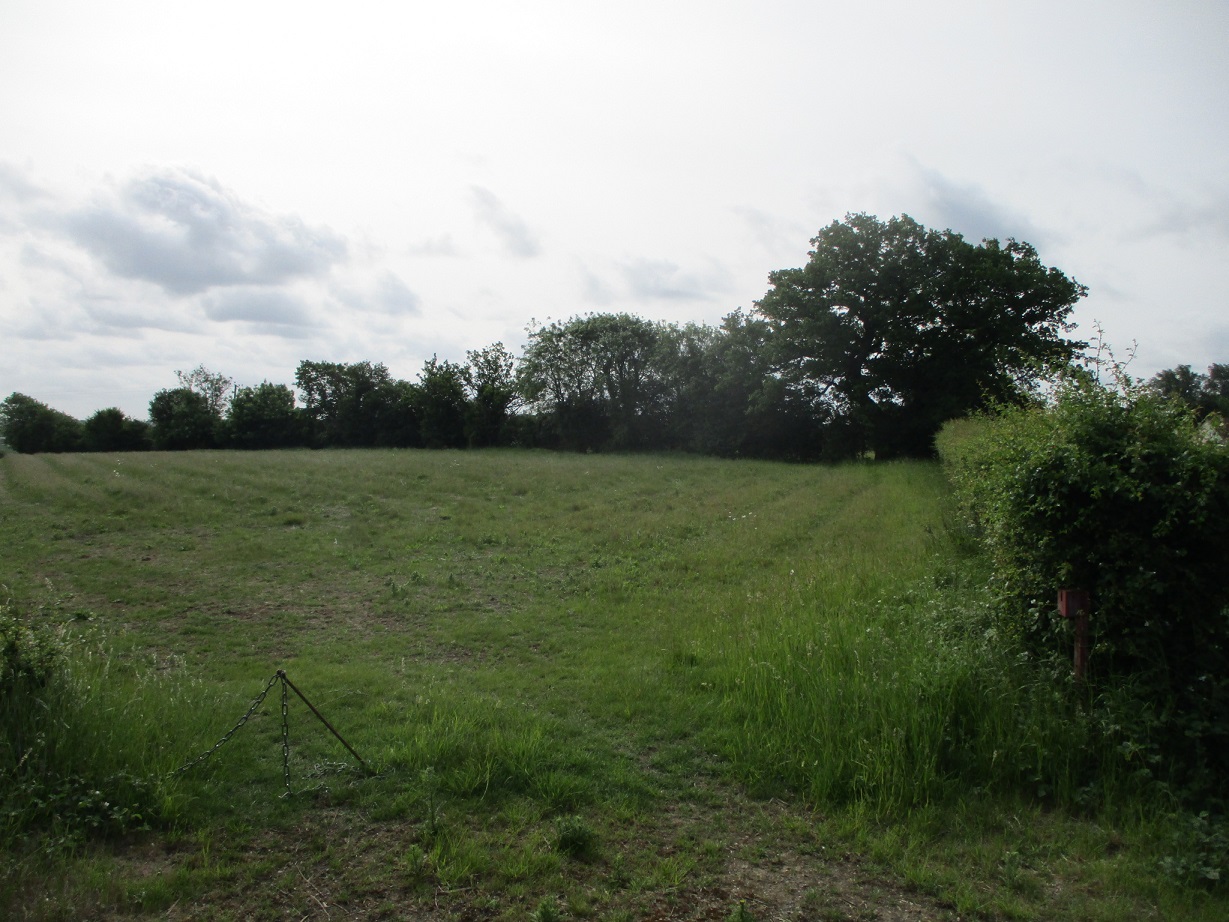
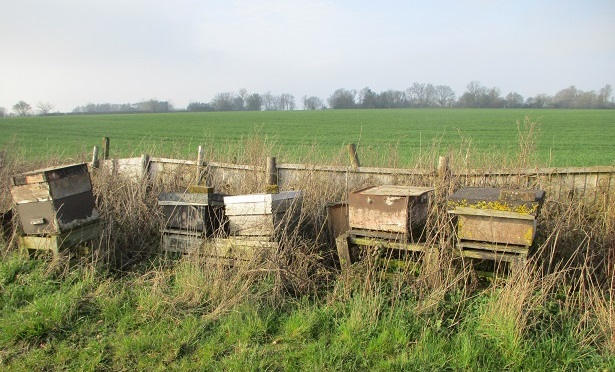
Now for the good news. A farming neighbour approached me and asked if I could remove some bees from two sites on his farm. These were out-apiaries which had been a selection of home-made commercial hives but due to the beekeeper’s ill health had been neglected for at least ten years. One was a rotten nucleus hive on its roof in Pinkney's Meadow and the others were old plywood home-made hives on Hill Field
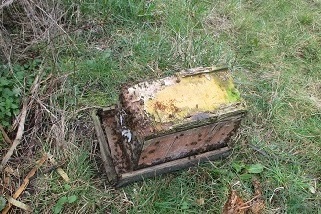
A cut-out is the term used to remove a self-hived swarm which has started or spent a long time laying down wax comb such that it has to be cut way from the structure. Although these were not strictly cut-outs, as in removal from a building, they were definitely cut-outs from structures.
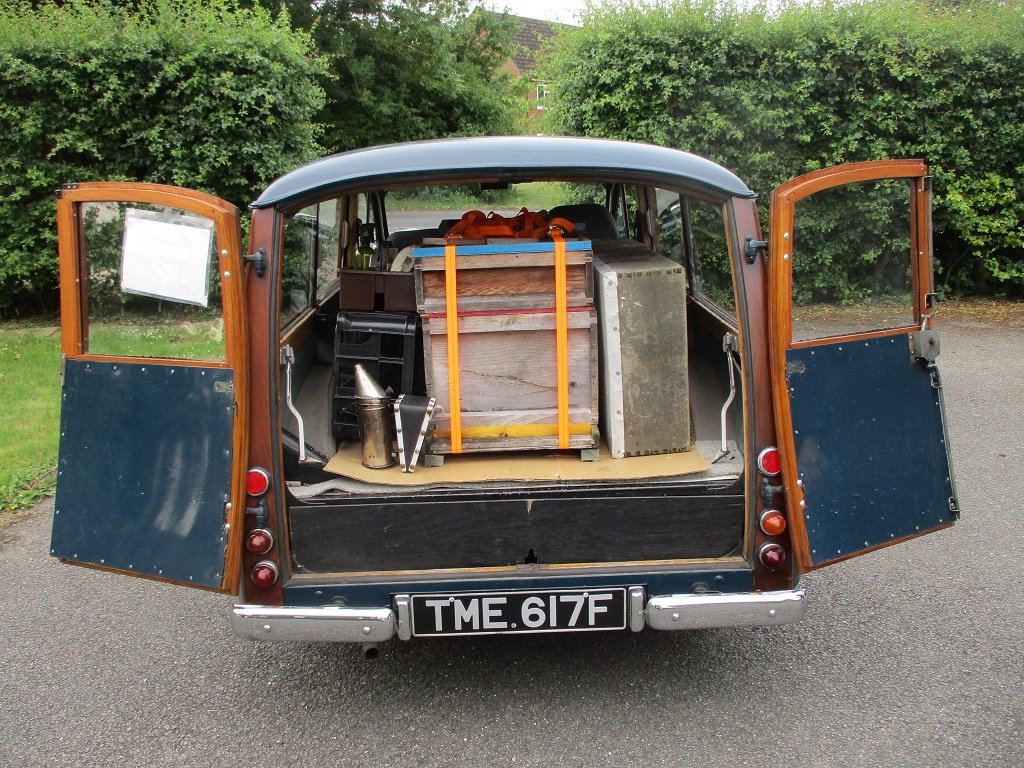
The nucleus hive, which was found upside down and burst open after a winter storm had survived but whether it was the first colony in the nuc or the n’th was debatable. Old black comb was running in every direction and a lot was unsavable. Frames were cut out using a carving knife to slice between them and then the hive tool as a lever. The frames were put into a fresh nuc which was taken to the out-apiary at Cutlers Green. Had I taken this hive to my home-apiary just over the hedge and across the field, the flying bees would have simply returned to whence they came.
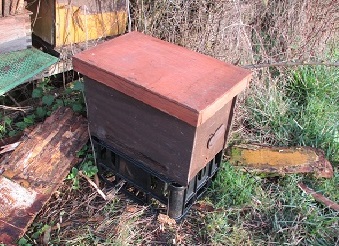
Hill Field had a line of plywood commercial hives which had really seen the best of their lives. It looked as if two of them might be populated or being robbed out; difficult to tell at first inspection.
The crown boards were well and truly stuck down and everywhere was a dense mass of wax-moth cocoons. Again, comb had been made running in every direction but mainly at right-angles to the frames. Carving knife and hive-tool were again used to lever out solid slabs of crystalized honey along with broken frames. Bits of comb and as many bees as possible were scooped into a swarm box and brought to the home apiary. An empty nuc was left on the hive stand to collect any stragglers which could be collected at a later date.
Because Hill field is only one mile from the home apiary, precautions had to be taken to deter the bees from flying back again. With the swarm box placed in the apiary, a heap of leafy branches was placed around the hive entrance. When the hive entrance was opened, the bees couldn’t just come hurtling out as usual but had to negotiate through the thicket making them realise that they were now in new surroundings and needed to reorientate.
Things didn’t go exactly to plan however as since the move, two of the three colonies are queenless and the third has immediately started supersedure. Watch this space.